Dining Room Designs That Work For Entertaining
- Start With The Table And Room Scale
- Match The Table Shape To The Room
- Choose Dining Chairs For Comfort And Proportion
- Use Lighting To Define The Dining Area
- Ground The Room With The Right Rug
- Coordinate Materials Without Matching Everything
- Design For The Way You Entertain
- Bring Your Dining Room Designs To Life
A dining room should make it easy to gather, eat, talk, and linger. The best dining room designs consider the table, chairs, lighting, and rug as parts of the same composition. Each piece should complement the others in scale, material, color, and proportion. A table that is too large can restrict movement, while an undersized rug or mismatched seating can make the space feel disconnected.
Here are practical ideas to help you create a dining room that feels balanced, comfortable, and ready for entertaining.
Start With The Table And Room Scale
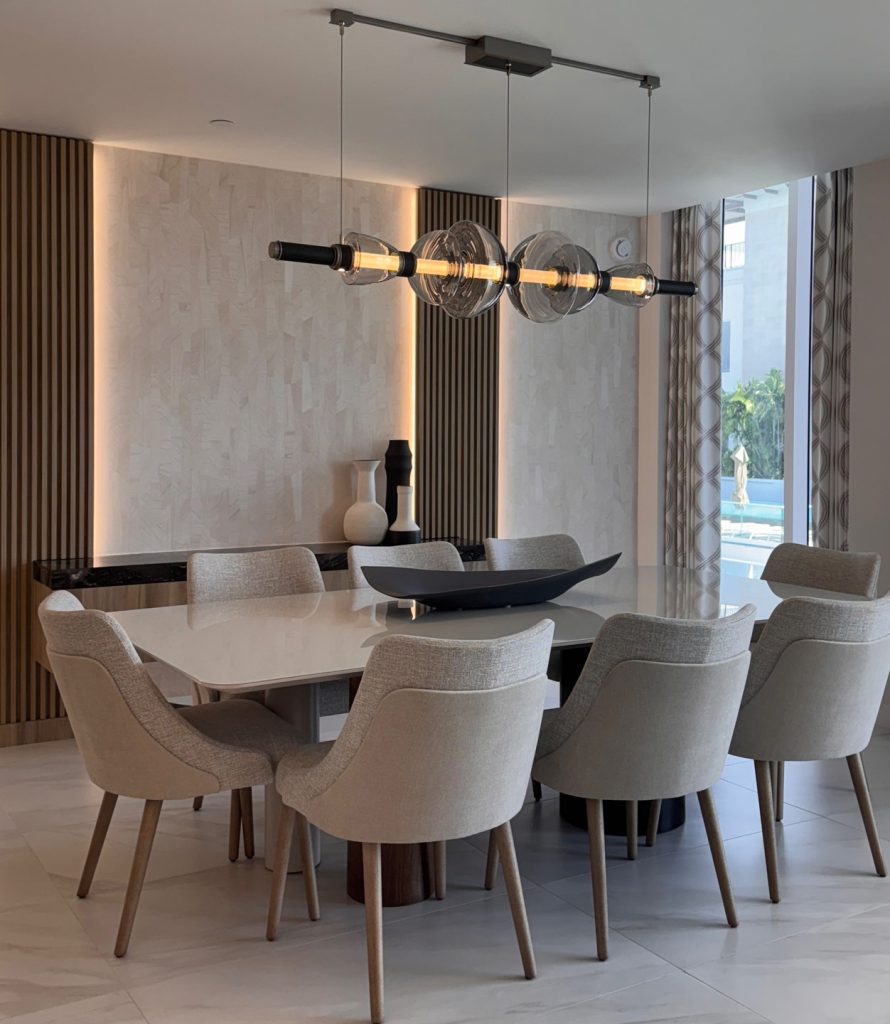
The dining table usually becomes the visual and functional anchor of the room. Dining room designs work best when the table’s size and shape suit the space and leave enough room for the surrounding pieces. Choose the table before selecting the chairs, lighting, and other furnishings so you can plan the rest of the room around it.
Begin by measuring the space, including doorways, openings, and major walkways. Mark the proposed table footprint on the floor with painter’s tape. This simple exercise lets you see how much space the table will actually occupy before you commit to it.
Aim for about 36 inches of clearance between the table edge and walls or other furniture. Increase that distance where people need to walk behind occupied chairs or where the dining room connects directly to another part of the home.
Think about how you entertain, too. A smaller rectangular table may suit intimate dinners. An extendable table gives you flexibility for larger gatherings without making the room feel oversized during everyday meals.
Match The Table Shape To The Room
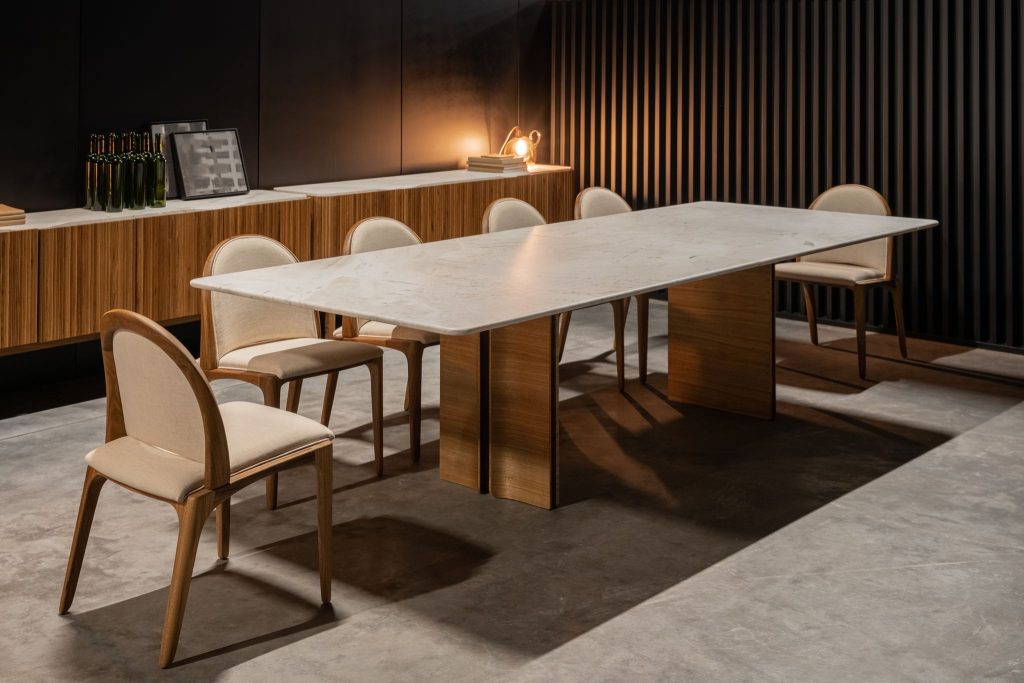
The room’s proportions should guide your dining table shape. A good fit leaves enough space around the table while creating a natural arrangement for conversation.
Consider these common options:
- Rectangular tables suit longer rooms and provide generous seating along each side.
- Round tables work well in smaller or square rooms and bring guests closer together.
- Oval tables offer the seating capacity of a rectangle with softer edges.
- Square tables can complement compact, symmetrical dining areas.
Pay attention to the table’s visual weight as well as its dimensions. A thick, substantial top can dominate a smaller room, while a lighter design may leave more visual space around the seating.
For a more sculptural look, consider a table with a distinctive base or unusual silhouette. AL2 offers furniture with expressive forms and distinctive details that can make the dining table a focal point.
Choose Dining Chairs For Comfort And Proportion
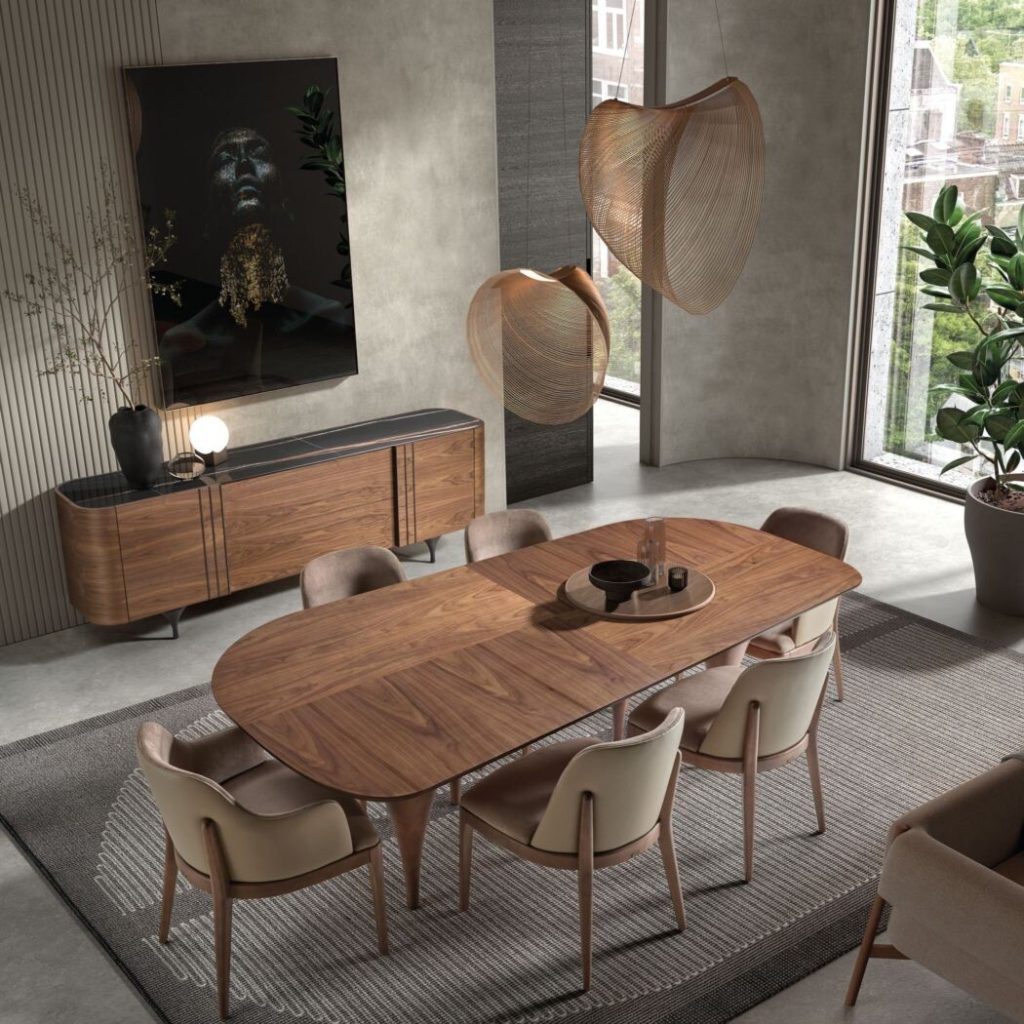
Once you establish the table, select chairs that relate to its height, width, material, and visual weight.
Check the table height before ordering chairs. Standard dining tables generally work with standard dining chairs, but unusual table designs, thicker aprons, or sculptural bases can affect legroom and comfort.
Give each guest enough elbow room to sit comfortably. Avoid squeezing another chair into every available gap simply to increase capacity. Crowded seating makes it harder for guests to eat, move in and out, and hold conversations comfortably.
Material also affects the character of the room. Upholstered chairs can soften a formal dining area and make long dinners more comfortable. Wood or metal chairs can introduce a cleaner, more contemporary feel.
If you mix materials, create a connection elsewhere in the room. A wood table can relate to wood detailing in the chairs or a nearby sideboard, while a metal chair frame can echo the finish of the chandelier.
Thayer Coggin offers dining chairs with customizable upholstery and frame finishes, giving you more flexibility when coordinating seating with an existing table or broader interior palette.
Use Lighting To Define The Dining Area
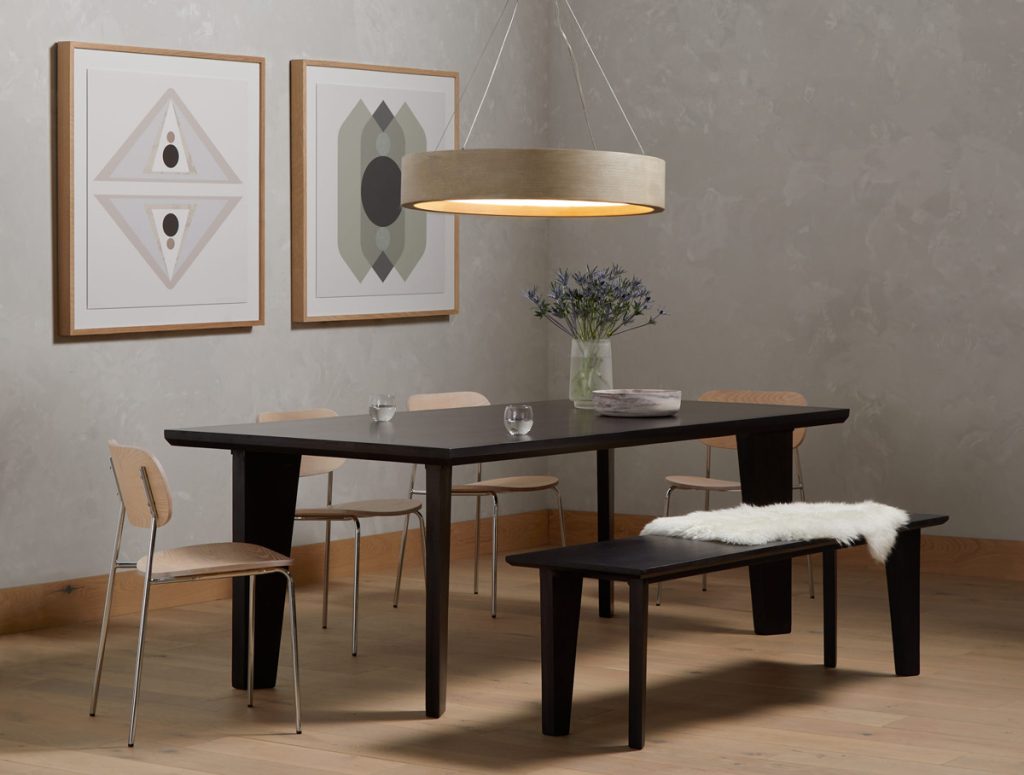
Lighting does more than illuminate the table. It establishes the mood, creates a focal point, and helps distinguish the dining area from nearby spaces, particularly in an open-plan home.
Choose a chandelier or pendant based on the table’s proportions rather than the room’s empty ceiling space. A fixture that is too small can disappear above a large table, while an oversized fixture can overwhelm the seating below it.
Hang the fixture high enough to maintain clear sightlines across the table while keeping the light close enough to provide effective illumination. Add a dimmer so you can adjust the atmosphere throughout the day. Brighter light can support everyday activities, while a softer setting creates a more relaxed mood for dinner.
Match the fixture’s shape to the table when possible. A linear chandelier can reinforce the length of a rectangular table, while a round fixture can complement a circular design. Use material to create balance, too. A warm wood table can contrast nicely with metal or glass lighting, while a dramatic stone or sculptural table may benefit from a simpler fixture.
Arteriors Lighting offers lighting in distinctive materials, finishes, and forms, making it an option when you want the fixture to contribute decorative interest without losing sight of the overall composition.
Ground The Room With The Right Rug
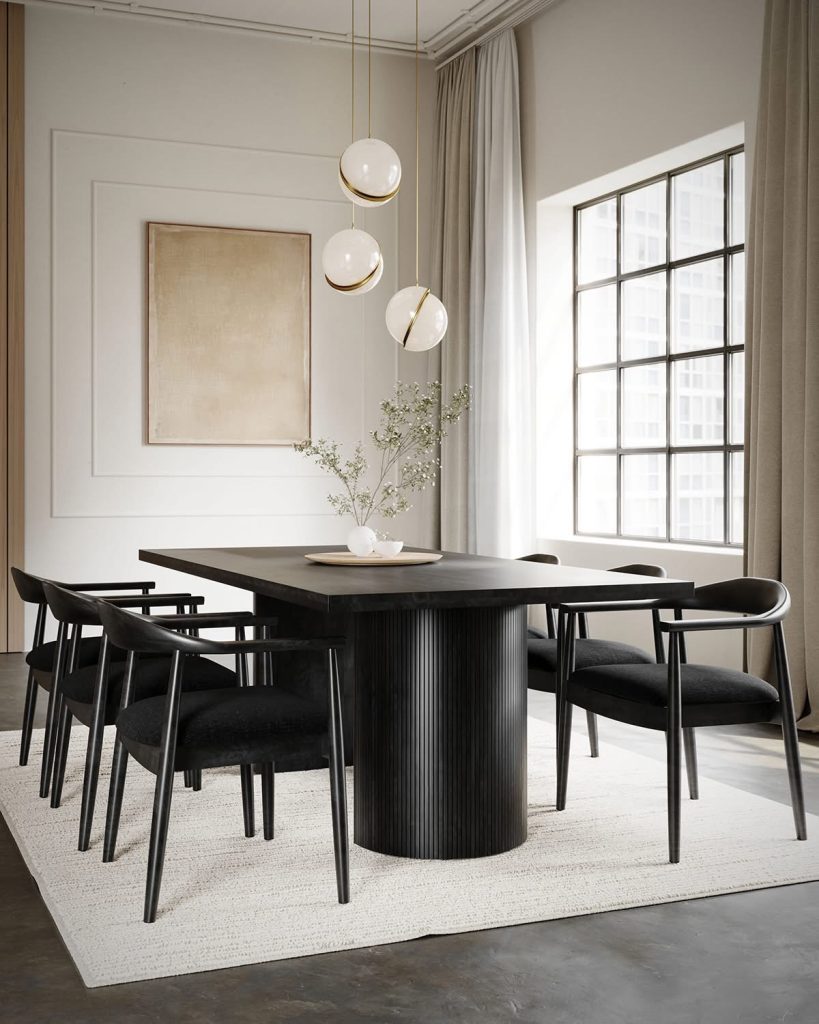
A dining room rug brings the table and seating together while visually defining the dining area. In an open-plan space, it can also establish a clear boundary between the dining zone and surrounding areas.
Size is the most important consideration. The rug should extend far enough beyond the table that chairs remain on its surface when guests pull them out. If chair legs regularly catch on the edge, the rug is too small for the arrangement.
Choose the rug after deciding on the table and seating layout. A larger rug often gives the dining set more breathing room and creates a stronger visual foundation.
Use the rug to balance the rest of the room. A simple wood table can support a patterned or textured rug, while a sculptural table and expressive chairs may work better with a quieter design.
Consider durability and maintenance before choosing the material. Dining areas experience spills, food crumbs, and frequent chair movement, so the rug should suit the way you actually use the room.
Coordinate Materials Without Matching Everything
A cohesive dining room doesn’t require every piece to come from the same collection. Matching every finish can make the space feel predictable, while carefully selected contrasts create more visual interest.
Build relationships between materials instead. Pair a natural wood table with upholstered seating, then repeat a related wood tone elsewhere in the room. A brass lighting fixture can connect with warm metallic details without requiring every element to have exactly the same finish.
Think about texture as well as color. Smooth wood, woven upholstery, metal, glass, and textured rugs can give the room depth even when you keep the color palette restrained.
Baker McGuire can support a layered approach with dining furniture and lighting suited to a range of interior styles. Elite Modern offers another option for contemporary spaces, with distinctive silhouettes and durable materials.
The goal is to create relationships between finishes, shapes, and textures without making every piece identical.
Design For The Way You Entertain
A dining room needs to function when guests arrive, not just look attractive when nobody is using it. Consider what happens before, during, and after a meal.
If you regularly host larger dinners, prioritize an extendable table and flexible seating. Keep clear paths between the dining room, kitchen, living area, and entryway so guests can move through the home without navigating around furniture.
Add a sideboard or console if you need storage for serving pieces, linens, glassware, or other entertaining essentials. Keeping frequently used items nearby can also reduce trips between the dining room and kitchen.
For smaller gatherings, focus on comfort and conversation. Round and oval tables can bring guests closer together, while comfortable upholstered chairs encourage people to stay at the table after the meal.
You can also use lighting and accessories to make the room adaptable. Dimmable lighting, movable chairs, and a versatile table allow the same space to support everyday meals, formal dinners, and larger gatherings.
Bring Your Dining Room Designs To Life
A well-designed dining room should be comfortable to use and easy to move around. The right dining room designs start with the table and available space, then bring together seating, lighting, and a rug that work well with it. Use materials, textures, and finishes to bring everything together without making the room look overly matched.
At Designers Mark, we offer furniture, lighting, rugs, and accessories from brands such as Adriana Hoyos, AL2, Arteriors, Baker, Elite Modern, Thayer Coggin, and Voler.
Call (561) 961-4149, contact us online, or visit our showroom at 10018 Spanish Isles Blvd, Suite A8, Boca Raton, FL.
Let our team help bring your dining room design ideas to life.